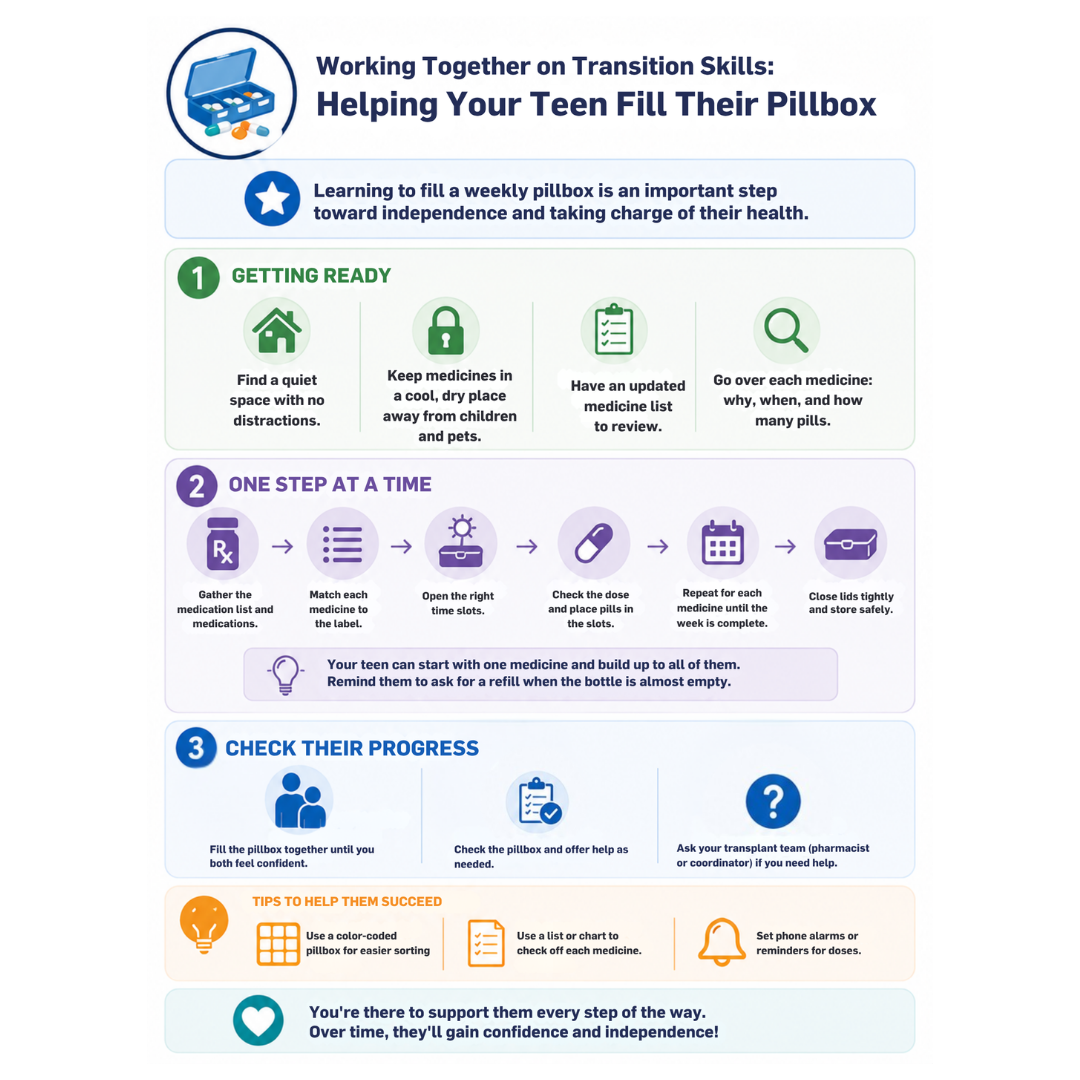
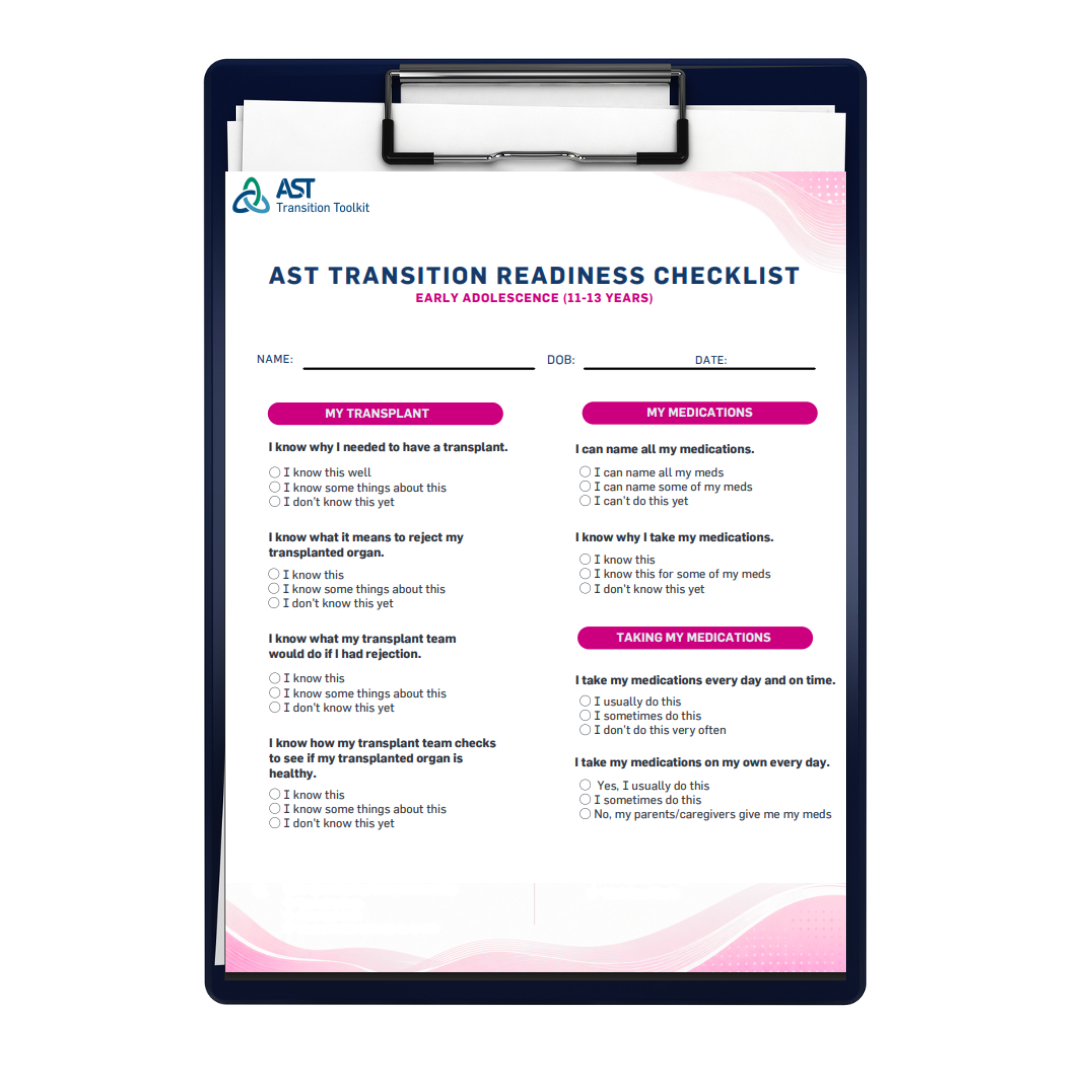
The AST is excited to launch a new series highlighting the incredible work of our Communities of Practice (COPs) and committees. We encourage you to explore their projects and consider getting involved!
TheAST Pediatric Community of Practice (PCOP) represents and advocates for professionals dedicated to advancing transplantation for pediatric populations through clinical care, research, and education. Through practical resources and educational programming, PCOP works to support pediatric transplant professionals, patients, and families throughout the transplant journey.
This summer, PCOP launched the AST Transition Toolkit, a comprehensive resource to help providers, parents, and teens with the transition to adult care. Check out this spotlight to learn more about the COP and this project.
Juhi Kumar, MD, MPH, Member-at-Large — Children’s Hospital of Pittsburgh
Debora Matossian, MD, MS, Member-at-Large — Ann & Robert H. Lurie Children’s Hospital of Chicago
Justin Chen, PharmD, Member-at-Large — Children’s Healthcare of Atlanta
Manu Varma, DO, Early Career Member-at-Large — NYU Langone Health
Current PCOP Initiatives
In addition to developing the featured AST Transition Toolkit, PCOP is advancing several initiatives designed to support pediatric transplant professionals, patients, and caregivers:
Preparing the second edition of the Pediatric Kidney Transplant Handbook
Hosting an educational series on challenging pediatric transplant cases
AYA transition from pediatric to adult care models has been a hot topic in recent years. Multiple resources have been created across pediatric chronic disease subspecialties, but it is difficult for transplant providers to know which resources are most useful and applicable to our particular patients. The Transition Toolkit workgroup of the PCOP, led by co-chairs Beverly Kosmach-Park, DNP, RN, FAAN and Beth Logan, PhD, took it upon themselves to collect and organize the information most pertinent to AYA solid organ recipients, their caregivers, and their providers. In this way, the Toolkit now provides a defined transition pathway for each of these.
What are you most excited about coming out of it?
First of all, I am excited that there is now a "one-stop-shop" for vetted educational information that providers can easily download and give to their patients and their families. Depending on staffing and time constraints, individual centers have varying amounts of time that they can spend on face-to-face counseling on some of these topics, and we want to know that we are giving them good information. Ultimately, though, the goal is that this publicly available web-based Toolkit will be promoted to and used by all transplant families with young recipients. The resources included here can serve as an ongoing point of reference for common questions and challenges that come up as patients mature throughout their transplant journey. In this way, the eventual aim is to optimize the independence and long-term outcomes of our solid organ recipients in this high-risk population.
How do you use this toolkit with your patients?
I am honestly still working with my local transplant teams to decide how to best organize and track our transition efforts, but we are definitely using a lot of the resources available in the Toolkit. The suggested Transplant Readiness Assessment checklists are used to track the skills and knowledge needed for successful transfer throughout the teen years. In this way, we know which areas we need to keep working on periodically as the years go by. The educational handouts on medication management and adherence are also go-to documents. For those of us not well-versed or comfortable in tackling sexual and reproductive health conversations, the related resources/downloads are also extremely welcome and useful!
What are you most proud of? I am so proud of this Transition Toolkit workgroup and their leadership. Their passion for our patients is evident in the amount of time and hard work they dedicated to this project. The layout is clear and user-friendly. The web-based product is so professional — they may want to consider a new day job (but I really hope they don't)!
What would you want other members to know about this work? First of all, PLEASE take the time to click on the link and explore what the Toolkit has to offer. Not all adult-facing providers regularly take the time to consider these topics in their young adult patients, whether they transferred from the pediatric side with an existing transplant or received their transplant in the young adult years. Regardless, these patients have many of the same challenges and risks. These same resources can help address these struggles and need to be used in both the pediatric and adult multidisciplinary transplant clinics.
Give Back
Make a difference in the field of transplantation by donating to support our cause.